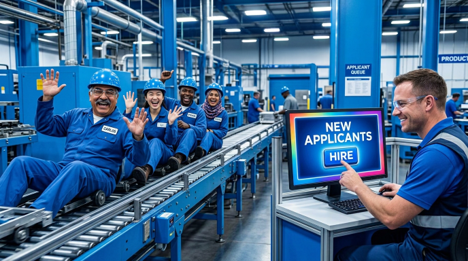
A picker quits on a Tuesday. Your shift is short by Wednesday. By the following Monday, overtime costs have eaten the margin on the order you were trying to protect. This is the math that makes fast warehouse staffing less of a nice-to-have and more of a survival skill for distribution centers right now.
Warehouse and DC operators are dealing with annual turnover of 35 to 50 percent in many markets, and traditional hiring simply isn’t built to keep up with churn at that pace.
Why Traditional Hiring Timelines Don’t Work Anymore
A standard full-time recruitment cycle, posting the role, screening resumes, interviewing, extending an offer, and waiting out a notice period, takes four to eight weeks in a tight labor market. That’s a long time to run a shift short, especially heading into a peak season.
According to Cognitops’ 2026 warehouse workforce shortage analysis, labor already represents 50 to 70 percent of total DC operating costs, and post-2020 wage increases of 15 to 20 percent still haven’t closed the availability gap. Paying more hasn’t solved the problem; it’s just raised the cost of not solving it.
Meanwhile, demand for workers hasn’t softened. The most recent JOLTS data from the Bureau of Labor Statistics shows job openings holding at 7.3 million nationally, with durable goods manufacturing openings actually climbing by 76,000 in a single month.
You can review the full figures in the July 2026 JOLTS report from the Bureau of Labor Statistics.
The Real Cost of a Slow Hire on the Warehouse Floor
Every day a role sits open, someone else absorbs the workload, usually through overtime, and the line either slows down or the safety margin does. Neither outcome is one you want to sustain for six to eight weeks while a traditional search plays out.
“Waiting for labor markets to self-correct carries compounding costs, as facilities acting early gain competitive advantages in talent acquisition that latecomers cannot easily close.”
Source: Cognitops, Warehouse Workforce Shortage 2026
The broader light industrial market backs this up. Madison Resources’ State of Light Industrial Staffing in 2026 reports that clients increasingly expect placements “within days or even hours,” and that reliable talent for specialized roles like machine operation remains genuinely hard to find without help.
How Fast Warehouse Staffing Actually Works
Fast deployment isn’t magic. It’s the result of a staffing partner doing the groundwork before you ever call with an open shift.
A Ready Pool Beats a Cold Search Every Time
A staffing partner who already maintains a pre-screened, safety-vetted pool of light industrial candidates can match someone to your role the same week, sometimes the same day, because the sourcing and screening already happened before you needed it.
This is exactly how DPI approaches temporary staffing for warehouse and distribution clients: candidates are qualified, background-checked, and ready to onboard, so speed doesn’t come at the expense of fit.
What the First Few Days Look Like
Expect a real intake conversation about the role, shift, and equipment involved, followed by candidate matching against people already screened for similar work, then fast onboarding paperwork and a safety orientation before the first shift starts. None of that requires weeks of lead time if the pipeline already exists.
Balancing Speed with Quality
Speed only helps if the person who shows up can actually do the job and wants to stay. Rushed placements from generalist staffing providers can carry hidden costs through high markups and steep turnover in a new hire’s first 60 days, which just recreates the original problem.
The fix isn’t to slow down. It’s to work with a partner who specializes in light industrial roles, understands the physical and safety demands of warehouse work, and treats retention as part of the placement, not an afterthought.
Key takeaways
- Traditional hiring cycles of four to eight weeks can’t keep pace with 35 to 50 percent annual turnover in many distribution centers.
- Wage increases alone haven’t solved warehouse labor shortages, since availability gaps persist even after 15 to 20 percent pay growth.
- Fast warehouse staffing works because a specialized partner builds a screened, ready candidate pool before you have an opening to fill.
- Speed and quality aren’t a tradeoff when the staffing partner focuses on light industrial roles and retention, not just placement volume.
Conclusion
A short shift today becomes a missed deadline next week if it isn’t addressed fast. Fast warehouse staffing exists because traditional hiring timelines were never built for the turnover rates and demand swings warehouses deal with now. The operators managing this well aren’t hiring faster by accident; they’re working with a staffing partner who already has the right people lined up.
If your warehouse or DC needs to staff up this week, not next month, DPI Staffing can help you fill the shift without cutting corners on who fills it.
→ Talk to DPI Staffing about temporary staffing for your warehouse